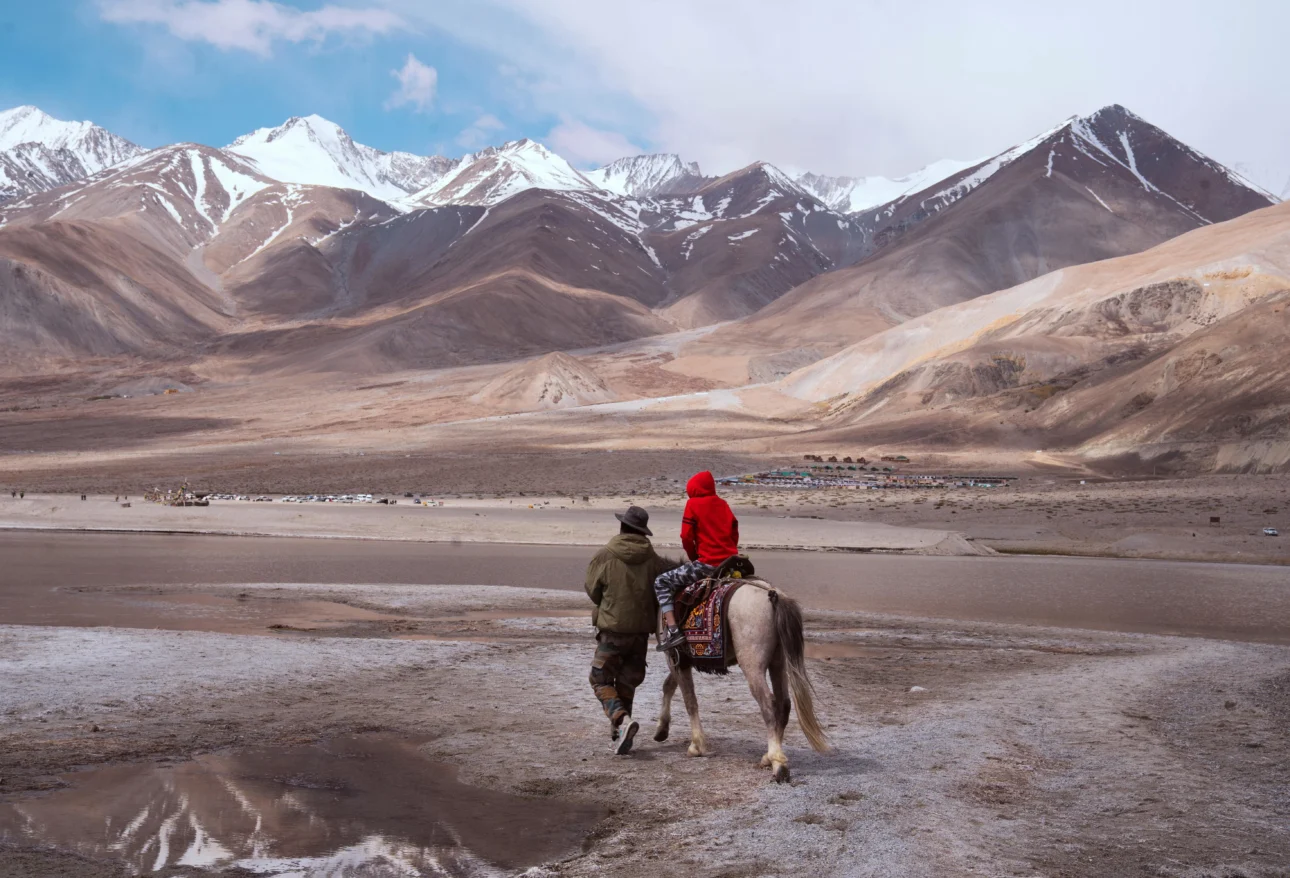
Packing for Leh Ladakh is not like packing for any other destination in India. At altitudes ranging from 3,500 to 5,600 metres, the terrain is unforgiving, oxygen levels drop to 60% of what you breathe at sea level, UV radiation increases by nearly 4% for every 300 metres gained, and temperatures can swing by 20°C within a single day. A forgotten item here is not an inconvenience; it can be a health risk.
Whether you are planning a summer circuit of Pangong Lake and Nubra Valley, a shoulder-season monastery trail, or the legendary Best of Ladakh 15-day tour that takes you deep into Zanskar, your Leh Ladakh packing list must be built around altitude safety, thermal management, and connectivity in remote terrain.
This Ladakh packing checklist covers exactly 30 essentials, divided by category and season, to ensure you arrive fully equipped, regardless of when you travel. Every item is listed with a clear reason, so you understand not just what to pack, but why.
The Core Leh Ladakh Travel Essentials (Items 1-10)
These 10 items are non-negotiable regardless of season, route, or travel style. Do not board your flight to Leh without every single one of these confirmed in your bag.
Mandatory Documents and Cash
- Inner Line Permit (ILP) — Required for restricted areas including Nubra Valley, Pangong Tso, and Tso Moriri. Carry physical copies AND digital backups. Checkposts are strict, and digital-only copies may be rejected at remote military checkpoints.
- Valid Government Photo ID — Passport for foreign nationals; Aadhaar, Voter ID, or Passport for Indian citizens. Required at every hotel check-in and ILP checkpoint.
- Emergency Cash (Minimum INR 10,000 in small denominations) — ATMs are limited in Leh and non-existent beyond the city. Nubra, Pangong, and Zanskar are cash-only economies. UPI connectivity is unreliable at altitude.
- Travel Insurance Policy Documents — Ensure your policy explicitly covers high-altitude trekking (above 3,500m) and medical evacuation by helicopter. Standard travel insurance often excludes high-altitude incidents — verify your policy before departure.
Essential Medications and First Aid
- AMS Medication: Acetazolamide (Diamox) 250mg — This is your most critical safety item. Diamox is prescribed to prevent Acute Mountain Sickness (AMS). Consult your doctor before travel for correct dosage. Begin 24-48 hours before ascent and continue for the first 48 hours at altitude.
- Personal First Aid Kit — Include: paracetamol, ibuprofen, antacids, ORS sachets, antiseptic cream, bandages, blister plasters, and a digital thermometer. Pharmacies in Leh stock basics, but availability beyond Leh is unreliable.
- Oxygen Can / Portable Pulse Oximeter — A pulse oximeter clips to your fingertip and reads blood oxygen saturation — SpO2 below 85% warrants immediate descent. A portable oxygen can (available in Leh markets) provides temporary relief during AMS episodes.
Skincare and UV Protection
- Broad-Spectrum Sunscreen: SPF 60 or Higher — UV intensity at 4,000+ metres is significantly higher than at sea level. Apply every two hours without exception. Glacier blindness and severe sunburn can occur within 30 minutes of unprotected exposure.
- UV-Protective Sunglasses: Category 3 or 4 Lens — Standard sunglasses are insufficient. You need wraparound UV400 or glacier glasses that block both UVA and UVB from all angles, including reflected light off snow and water.
- SPF Lip Balm and Moisturising Cream — Ladakh’s dry, cold air causes rapid lip chapping and skin cracking — especially at high passes. Cracked lips and hands are not just uncomfortable; open skin is a potential infection route.
Clothing and Layering Masterlist (Items 11-22)
The fundamental rule of Himalayan dressing is the 3-Layer System: a moisture-wicking base layer, a thermal insulating mid-layer, and a windproof/waterproof outer shell. Each layer serves a distinct function, and removing or adding layers is how you manage temperature across a single day that may start at -5°C at dawn, peak at 20°C by noon, and drop to 5°C by sunset.
Packing Rule: Never pack Ladakh clothing in checked baggage only. Carry at least one full set of thermals, a fleece, and your medication in your cabin bag — flights to Leh are frequently delayed and baggage can arrive separately.
- Thermal Base Layer (Set of 3 — Top and Bottom) — Moisture-wicking thermal underwear forms the foundation of your warmth system. Choose merino wool or synthetic polypropylene — avoid cotton, which retains sweat and causes rapid chilling.
- Mid-Weight Fleece Jacket (x2) — A 200-weight fleece is your workhorse insulation layer. Pack two — one for trekking days and one for evenings at camp or guesthouse.
- Windproof and Waterproof Outer Shell Jacket — Your outer shell must block Ladakh’s high-altitude winds while remaining breathable. Gore-Tex or equivalent is ideal. This is the layer that protects you at Khardung La and Chang La passes.
- Insulated Down Jacket (700-fill or higher) — For evenings, early mornings, and any travel from October onwards, a down jacket is non-negotiable. Even in summer, temperatures after sunset at Pangong Lake or Nubra Valley drop sharply.
- Waterproof Trekking Trousers — Combine with thermal base layer underneath. Trekking trousers must be wind-resistant and quick-drying. Avoid jeans entirely — they take 24+ hours to dry and provide zero thermal insulation when wet.
- Woollen Socks (5-6 Pairs) and Liner Socks — Merino wool socks regulate temperature across both hot and cold conditions. Liner socks reduce friction and prevent blisters on long trekking days. Damp feet at altitude are a serious blister and frostbite risk.
- Sturdy Waterproof Trekking Boots (Ankle Support) — This is your single most important gear investment. Boots must be broken in before departure — blisters at 4,800 metres are genuinely debilitating. Ensure Gore-Tex lining and a Vibram or equivalent rubber sole for grip on wet rock and scree.
- Lightweight Camp Shoes or Sandals — Your trekking boots need to air out. A pair of lightweight sandals or slip-ons for guesthouse evenings gives your feet recovery time and keeps your boots dry inside.
- Fleece-Lined Gloves + Waterproof Outer Gloves — Double-layer your hands: a thin fleece liner for dexterity (camera use, phone operation) and a waterproof outer shell for wind and snow. Fingerless gloves for photography are a useful addition.
- Woollen Balaclava or Neck Gaiter — Wind at high passes cuts through conventional scarves instantly. A balaclava covers the face, neck, and head in one — critical for Khardung La crossings and winter Chadar trekking.
- Wide-Brim Sun Hat or UV-Protective Cap — For summer travel, a hat with neck flap protection is essential during midday sightseeing. UV at altitude will cause sunburn through clouds — shade from a hat is a practical daily necessity.
- Breathable Rain Poncho — Ladakh receives passing monsoon showers from July to early August. A packable, lightweight poncho (not a full rain jacket) allows you to cover both yourself and your day bag quickly.
Electronics and Gadgets for Remote Terrain (Items 23-30)
Ladakh’s remoteness is its magic — and its most practical challenge. Mobile networks are patchy, power cuts are common, and temperatures drain lithium-ion batteries at twice the normal rate. Every item in this section addresses a specific connectivity or power problem unique to high-altitude remote travel.
Tech Warning: Do not rely solely on your smartphone for navigation. Mountain roads beyond Leh have no reliable data signal. Offline maps and a physical route card are essential.
- Heavy-Duty Power Bank: 20,000 mAh Minimum — Cold temperatures reduce battery capacity by 30-40%. A 20,000 mAh power bank ensures multiple full charges for your phone and camera across a full day of remote travel with no power outlet access.
- Universal Travel Adapter and Multi-Port Charger — Guesthouses in Leh and Nubra have limited sockets. A multi-port USB charger (with PD fast charging) lets you charge 3-4 devices simultaneously during the brief evening power window.
- BSNL or Airtel Postpaid SIM Card — This is critical: prepaid SIMs do not work in Jammu and Kashmir and Ladakh under current regulations. Purchase an Airtel or BSNL postpaid SIM before departure. BSNL has the widest coverage in remote valleys including Nubra and Kargil.
- Offline Navigation App with Downloaded Ladakh Maps — Download Maps.me or OsmAnd with full Ladakh offline maps before departure. Google Maps requires data connectivity. At Pangong Lake and Zanskar, you will have zero signal for multi-day stretches.
- DSLR or Mirrorless Camera with Extra Batteries (x3) — Cold kills batteries faster than anything. Carry three charged batteries minimum and store them close to your body (inside jacket) in sub-zero conditions. A 64GB or larger memory card eliminates mid-trip storage anxiety.
- Waterproof Camera Dry Bag or Housing — Lake mist at Pangong, sudden mountain showers, and river crossings pose a real risk to camera equipment. A waterproof dry bag is a fraction of the cost of replacing your camera.
- Headlamp with Lithium Batteries — Power cuts are common across Ladakh. A headlamp with lithium batteries (which perform in cold; alkaline batteries fail below -10°C) is essential for night navigation to bathrooms, guesthouses, and campsites.
- Satellite Communicator or Emergency Beacon (SOS Device) — If you are trekking beyond Leh city — particularly in Zanskar, Spiti, or on the Chadar route — a satellite communicator (Garmin inReach, SPOT) is a potential life-saver. Mobile signal will be absent for days at a time in these zones.
Seasonal Adjustments: What to Add to Your Ladakh Packing Checklist
Your base Ladakh trip packing guide remains constant across all seasons. What changes is the weight and specialisation of your gear. Here is what to add for each travel window.
Summer (June to September): Peak Season Essentials
Summer is the most accessible and popular window for Ladakh travel — but do not mistake it for a warm-weather trip. The Best of Ladakh tour is most popular during this window, when all passes including Khardung La and Chang La are open.
Add to your base list: SPF 60+ spray sunscreen (for reapplication over clothing), a UV-protective full-sleeve shirt, anti-insect repellent (for river campsites), a rain poncho (July-August showers), and lightweight quick-dry travel towel. Electrolyte sachets help combat dehydration at altitude during warm summer days.
Shoulder Season (May and October): The Transition Window
May and October offer fewer crowds and dramatic landscapes — but passes can close overnight due to sudden snowfall. This is also an excellent time to combine Ladakh with a Lahaul Valley itinerary before the full winter closure.
Add to your base list: Heavy insulated down jacket (not just a fleece), waterproof gaiters (for unexpected snowfall on passes), chemical hand warmers (disposable, single-use), a spare pair of thermal base layers, and microspikes for ice on mountain roads. Roads to Pangong and Nubra may close without warning — carry 2-3 days of extra dry rations.
Winter and Chadar Trek (November to April): Sub-Zero Specialist Gear
Winter Ladakh is a specialist’s territory. The Zanskar River freezes to form the legendary Chadar Trek route — an experience unlike anything else in India. Temperatures routinely drop below -20°C at night, and -30°C is not uncommon in Zanskar Gorge.
Add to your base list: Expedition-grade down jacket (-20°C rated or lower), a -40°C sleeping bag, neoprene snow boots (waterproof and insulated), a full balaclava face mask, multiple chemical hand and foot warmers, an insulated stainless steel flask (for hot drinks; plastic freezes), insulated crampons for ice walking, and thick expedition-grade socks rated for sub-zero temperatures. Your Leh Ladakh travel essentials kit in winter must double in thermal capacity compared to summer.
Medical Note: Acclimatise for a minimum of 2 full days in Leh before any trek or high-pass crossing in any season. AMS does not differentiate between summer and winter travellers.
Quick-Glance Seasonal Packing Summary
Use this table to calibrate your Ladakh packing checklist against your specific travel window.
| Season | Months | Temp. Range | Key Packing Focus |
| Summer | Jun – Sep | 5°C to 25°C | SPF 60+ sunscreen, UV sunglasses, light thermals, rain poncho, full-sleeve shirts |
| Monsoon | Jul – Aug | 8°C to 22°C | Waterproof bag cover, quick-dry clothing, rain jacket, anti-fungal powder, waterproof trekking shoes |
| Autumn | Oct – Nov | -5°C to 15°C | Heavy fleece, insulated jacket, thermal layers, woollen gloves, balaclava |
| Winter / Chadar | Dec – Apr | -30°C to 0°C | Expedition down jacket, -40°C sleeping bag, neoprene boots, hand warmers, insulated water flask |
If you are planning a broader Himalayan circuit that connects Ladakh with Himachal Pradesh, the Himachal Highlights tour covers Shimla, Manali, Palampur, and Dalhousie — many of the same layering principles from this guide apply to the Rohtang and Baralacha La crossings.
Manali is one of the most common road entry points into Ladakh. Our guide to 7 must-visit Manali tourist places for 2026 covers the key stops before your Leh ascent — including Rohtang Pass acclimatisation and the Solang Valley gateway.
Families travelling with children to North India’s mountain regions should review our India tour packages for family: stress-free summer trip guide for age-appropriate itinerary planning and altitude considerations for younger travellers.
For a broader mountain adventure combining Kashmir and Ladakh, the Best of Kashmir tour from Ashoka Holidays pairs naturally with a Leh extension — Dal Lake and the Gulmarg meadows before the high altitude of Ladakh form an excellent physiological and experiential progression.
For North India travel inspiration beyond the mountains, our Top 10 tourist places in North India guide covers the wider circuit, from Varanasi’s ghats to Rajasthan’s forts, that many Ladakh travellers combine into a multi-week India itinerary.
Your Leh Ladakh Packing List Is Your First Act of Preparation
Ladakh rewards the well-prepared and humbles the underprepared in equal measure. Every item on this 30-point Ladakh packing checklist exists because a traveller — somewhere on a Himalayan pass — needed it and did not have it. The altitude is immovable. The cold is non-negotiable. The remoteness is absolute.
But with the right gear, Ladakh delivers experiences that no other destination on earth can replicate: the electric blue of Pangong at sunrise, the silence of Tso Moriri at dusk, the ancient chanting drifting from Hemis Monastery across a valley of prayer flags. Smart packing does not just protect you — it frees you to be fully present for every moment of it.
Ready to plan your Ladakh expedition with expert guidance? Contact Ashoka Holidays — 30 years of crafting Himalayan journeys that are built around your safety, comfort, and discovery.

Ronit is a dynamic travel professional and a key driving force behind Ashoka Holidays, overseeing business operations and strategic growth initiatives. With a strong understanding of the travel industry, he focuses on delivering seamless and memorable experiences for global travelers. He plays an active role in curating innovative tour packages and maintaining high service standards across destinations.