Introduction to Agra Fort
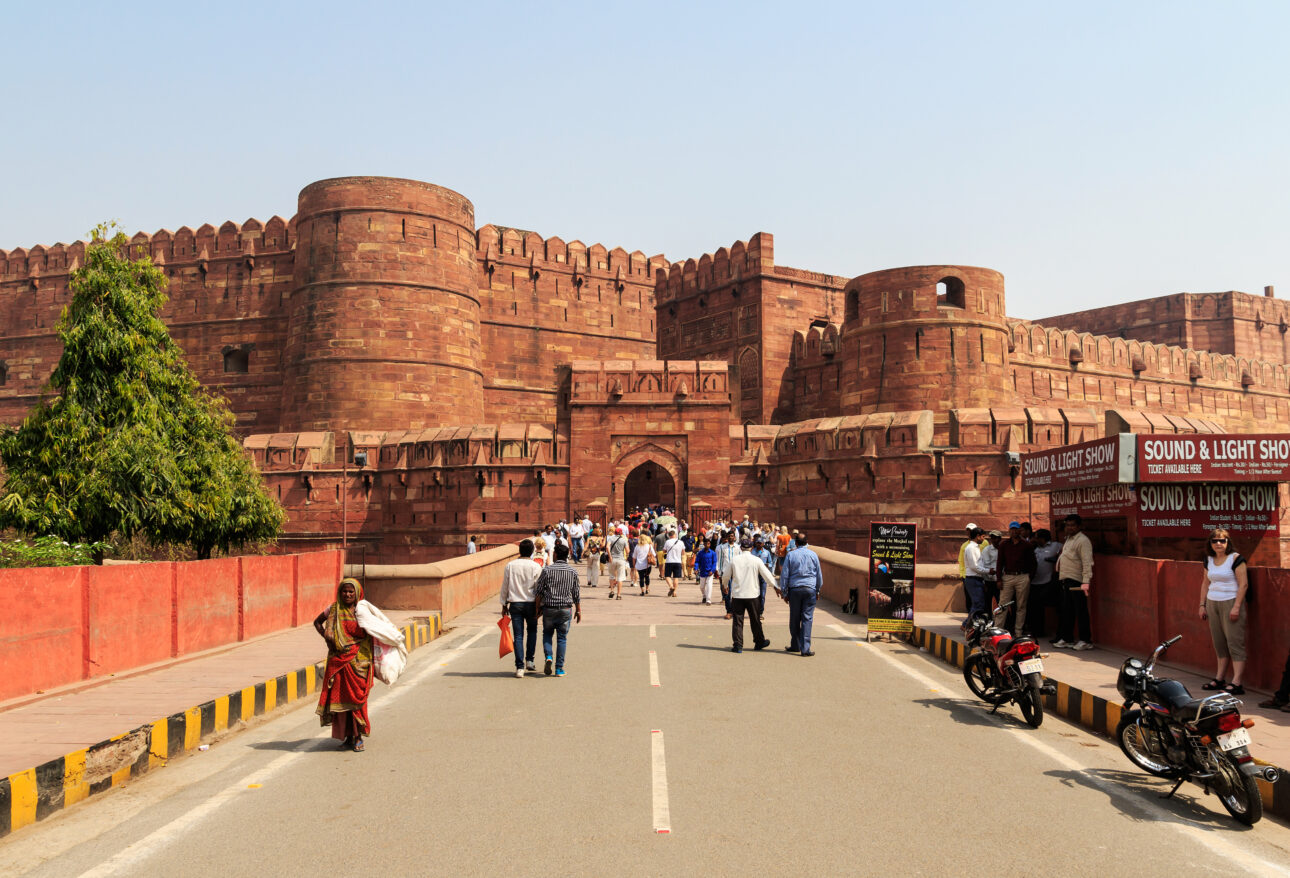
Declared a UNESCO World Heritage Site, Agra Fort represents a turning point in medieval Indian architecture. Massive walls conceal refined palaces, audience halls, and mosques that reflect changing Mughal tastes over generations.
Origins and Early History
The site originally housed a brick fort under the Lodi dynasty before Mughal ruler Babur captured Agra in 1526. However, it was Emperor Akbar who transformed the structure into a grand fortified city in the mid-16th century. Akbar envisioned a military stronghold that could also function as an administrative capital.
Constructed primarily between 1565 and 1573, the fort used red sandstone brought from nearby regions. Its strategic riverside location ensured defense while allowing control over trade and movement.
Mughal Expansion and Royal Life
Successive emperors modified the fort to reflect their personal preferences. Jahangir added residential quarters, while Shah Jahan replaced several sandstone structures with white marble buildings. Ironically, Shah Jahan later spent his final years imprisoned here by his son Aurangzeb, gazing at the Taj Mahal from Musamman Burj.
This layered history makes the fort an essential stop in any Agra Fort tourist guide, offering insight into both grandeur and human vulnerability.
Architectural Planning of the Fort
Agra Fort follows a semi-circular plan with towering walls stretching over 2.5 kilometers. The fortification includes double ramparts, bastions, and massive gateways designed for defense.
Inside, the layout transitions from military precision to refined symmetry. This contrast reflects the Mughal vision of combining power with elegance, a defining feature of Agra Fort Mughal architecture.
Major Structures Inside Agra Fort
Jahangiri Mahal
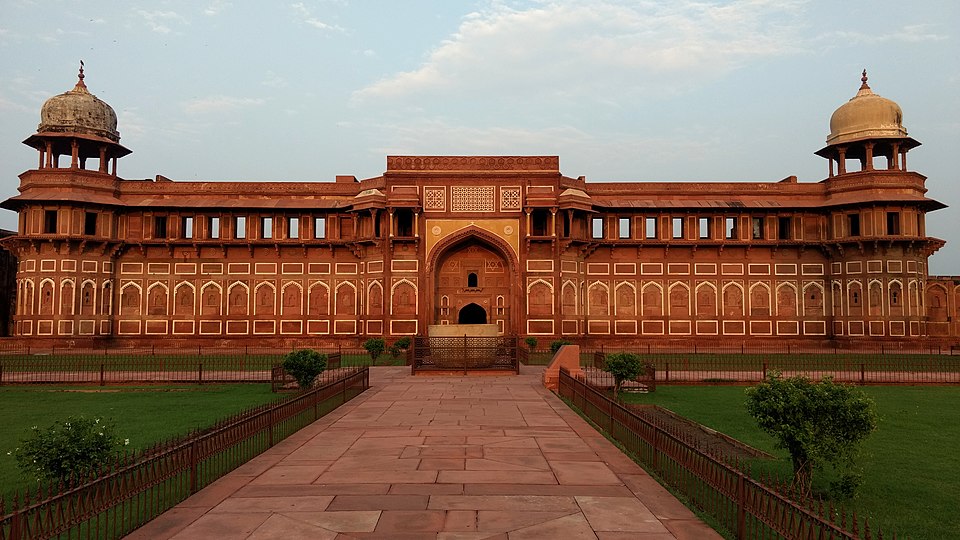
One of the earliest surviving structures, Jahangiri Mahal blends Islamic and Hindu architectural elements. It served as a private residence for royal women.
Diwan-i-Aam
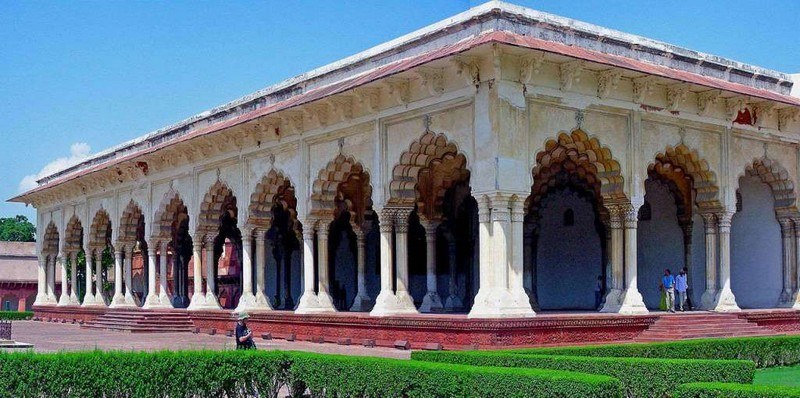
The Hall of Public Audience allowed emperors to address citizens and officials. Its open design symbolized transparency and authority.
Diwan-i-Khas
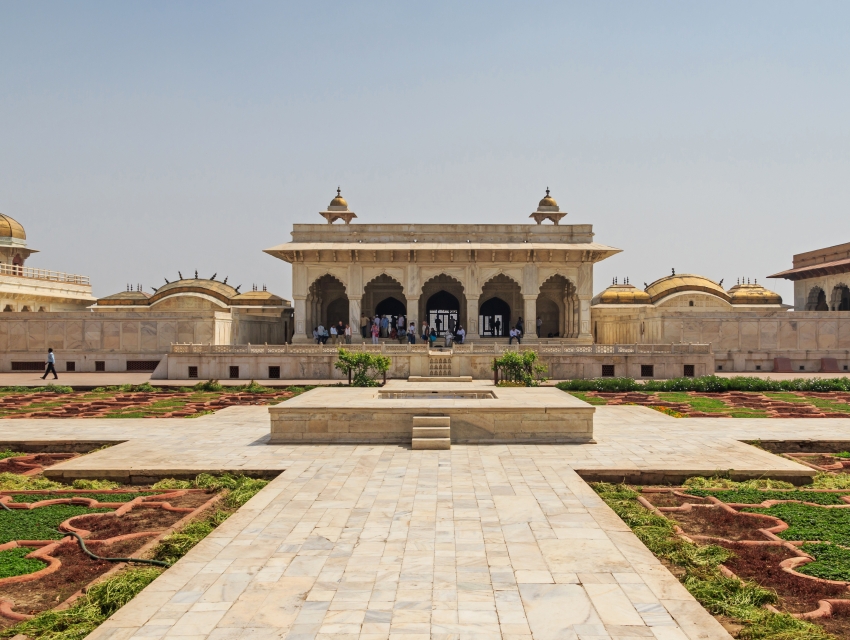
Reserved for nobles and foreign envoys, this hall reflects exclusivity through ornate marble work and balanced proportions.
Musamman Burj
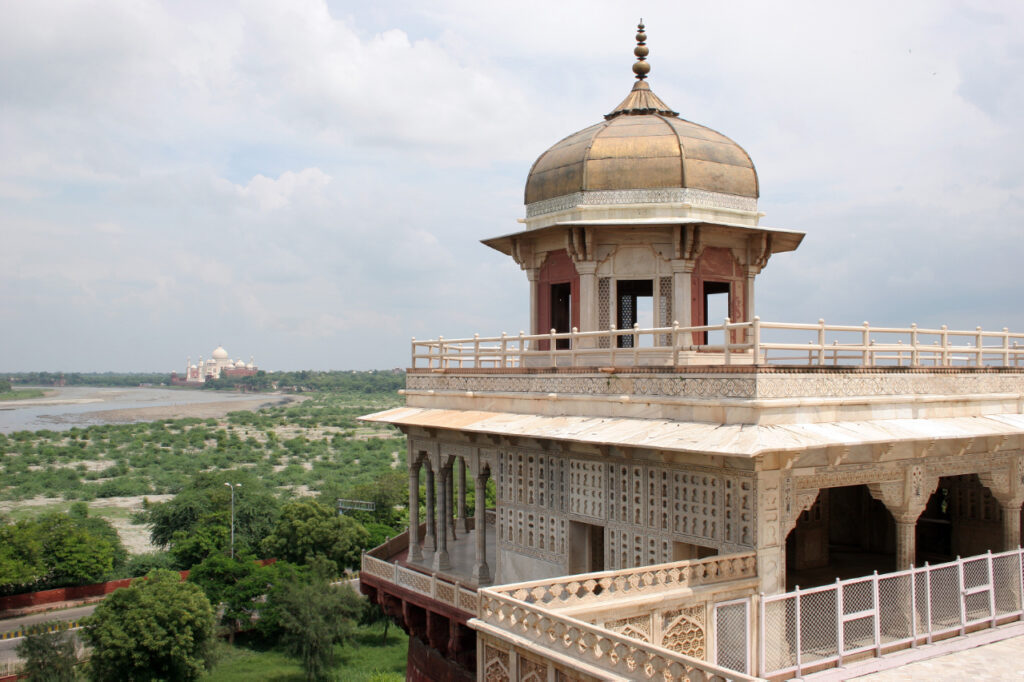
An octagonal tower with intricate marble inlay, it offered views of the Yamuna and Taj Mahal. This was Shah Jahan’s final residence.
Moti Masjid
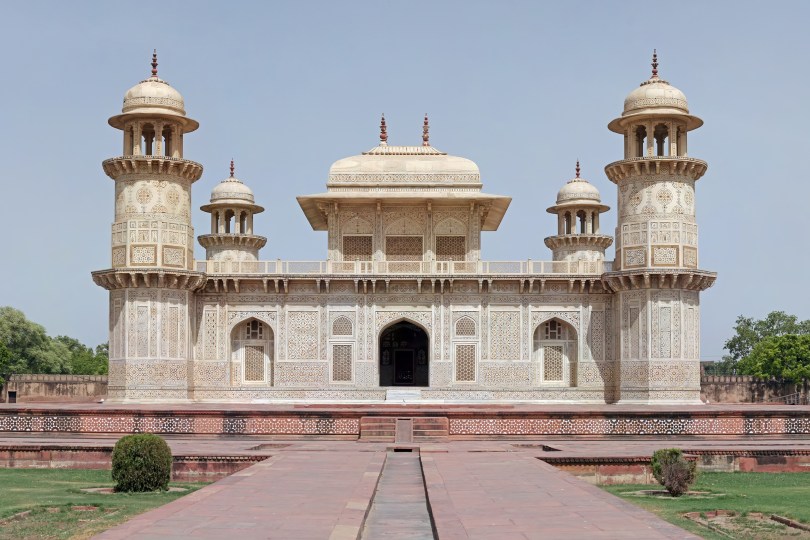
Built by Shah Jahan, the Pearl Mosque is known for its serene white marble structure and spiritual simplicity.
Materials, Design, and Symbolism
Red sandstone dominates the outer fort, representing strength and permanence. Inner palaces showcase marble, pietra dura, floral motifs, and calligraphy—symbols of refinement and divine order.
Water channels, gardens, and courtyards followed Persian charbagh concepts, reflecting balance between nature and architecture. These design choices communicated imperial control over both land and culture.
Cultural and Historical Importance
Agra Fort was more than a residence; it was a center of governance for the Mughal Empire at its peak. Major political decisions, military strategies, and royal ceremonies took place within these walls.
Its proximity to the Taj Mahal connects it naturally with broader heritage circuits such as the Golden triangle tour India packages, offering a deeper understanding of Mughal India when paired with Delhi and Jaipur.
Visiting Agra Fort Today
Agra Fort remains well-preserved, with regulated entry and interpretive signage. Early mornings and late afternoons offer quieter exploration and softer light for architectural appreciation.
The fort fits seamlessly into an Indian tourism package focused on history, architecture, and cultural continuity rather than rushed sightseeing.
Conclusion
Agra Fort stands as a testament to an empire that valued strength as much as beauty. Its walls narrate stories of conquest, creativity, devotion, and decline. Understanding its layered past and thoughtful design adds depth to any visit to Agra. When approached with historical context, the fort reveals itself not merely as a monument, but as a living archive of Mughal legacy.
FAQs:
Who built Agra Fort?
Agra Fort was primarily built by Emperor Akbar in the 16th century and later modified by his successors.
Why is Agra Fort historically important?
It served as the main residence and administrative center of the Mughal emperors for several generations.
Is Agra Fort older than the Taj Mahal?
Yes, Agra Fort predates the Taj Mahal by several decades.
What architectural style defines Agra Fort?
The fort reflects Mughal architecture with a blend of Islamic, Persian, and indigenous Indian elements.
How long does it take to visit Agra Fort?
A detailed visit usually takes two to three hours.
Are there marble structures inside Agra Fort?
Yes, several inner palaces and mosques built by Shah Jahan use white marble.
Is Agra Fort part of UNESCO World Heritage Sites?
Yes, it was designated a UNESCO World Heritage Site in 1983.

Ronit is a dynamic travel professional and a key driving force behind Ashoka Holidays, overseeing business operations and strategic growth initiatives. With a strong understanding of the travel industry, he focuses on delivering seamless and memorable experiences for global travelers. He plays an active role in curating innovative tour packages and maintaining high service standards across destinations.